VOCO Chengdu Jiuyanqiao presents an atmosphere that is both modern and rooted in local culture.
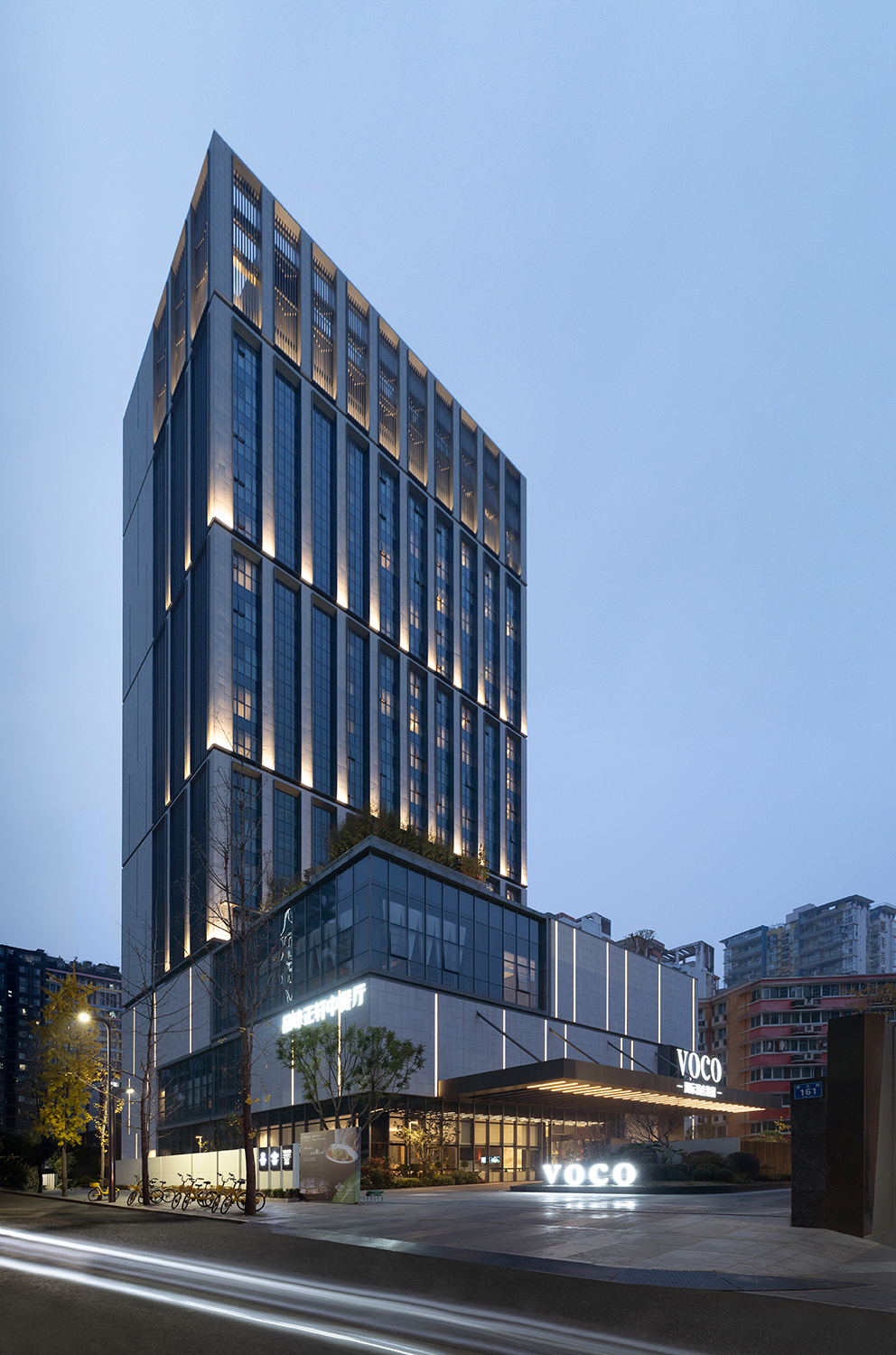
The tower façade uses stepped vertical wall-washing to define its proportions. A modest increase in brightness at the crown draws the eye upward, while the middle section stays restrained so the tower reads clearly in the night skyline without being showy.
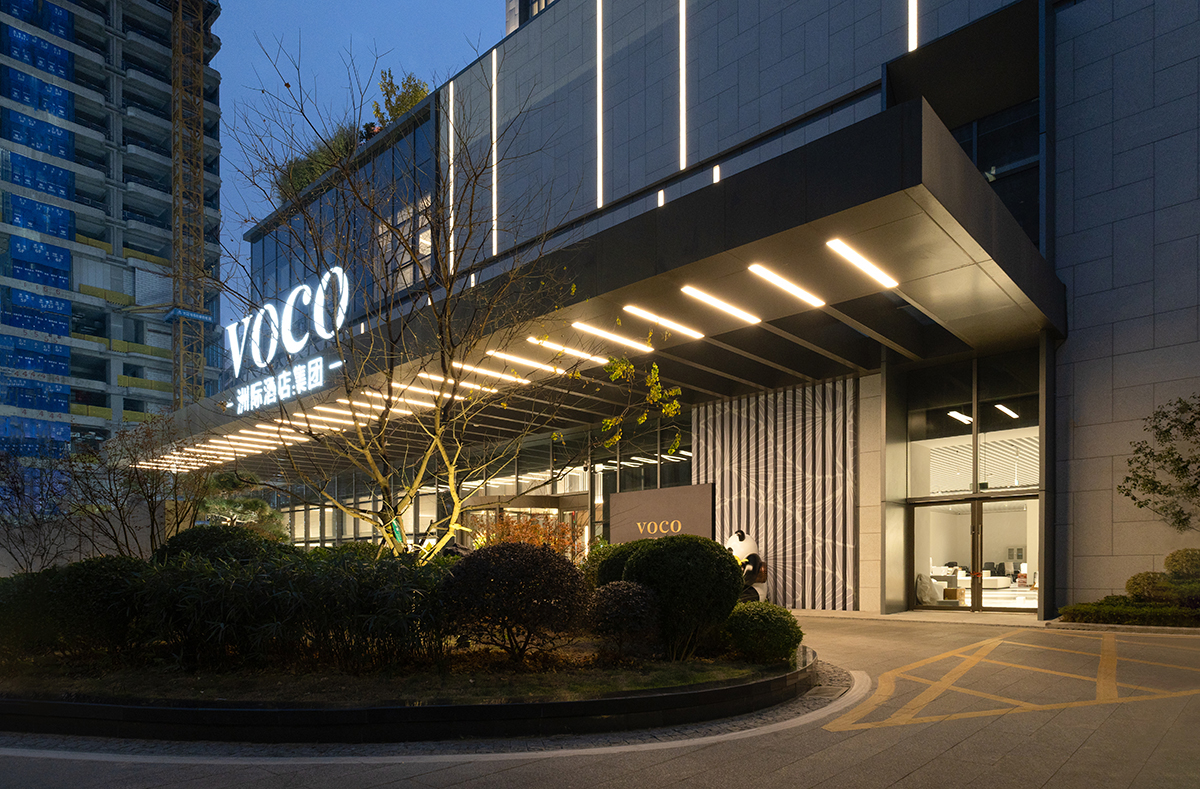
The podium is outlined with strong vertical lines of light that give the building a poised, upright presence. The illuminated VOCO sign makes the entrance immediately legible. These linear lights read like musical notation, helping the hotel stand out in Chengdu after dark.
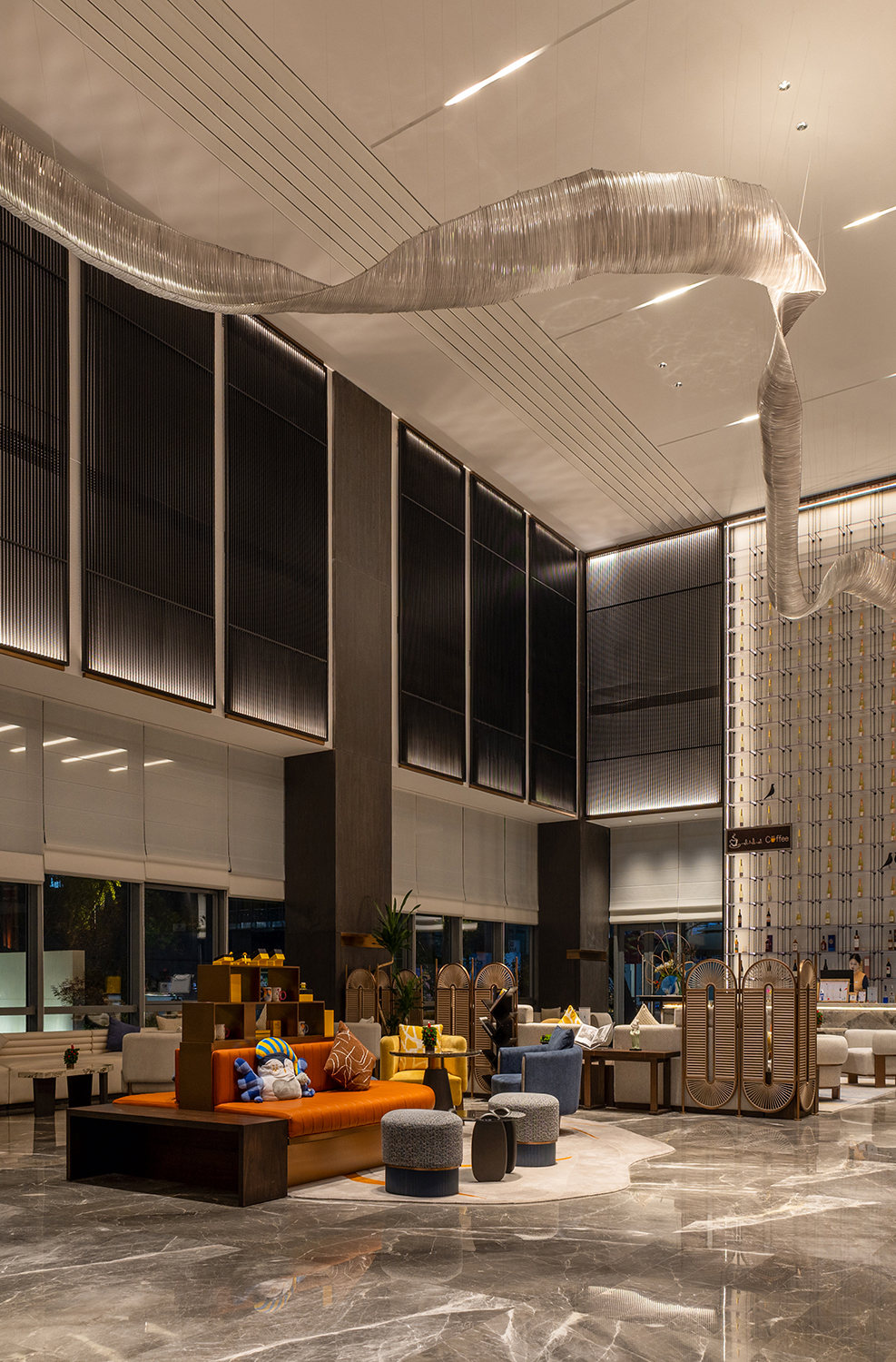
Within the lobby, layered lighting establishes a sense of order: the upper volume governs ambient brightness while the lower zone intensifies illumination in areas of activity. The art installation engages in a dialogue with the facade-mounted linear lighting, vertical against horizontal, composing a spatial rhythm where light becomes the primary language connecting functions.
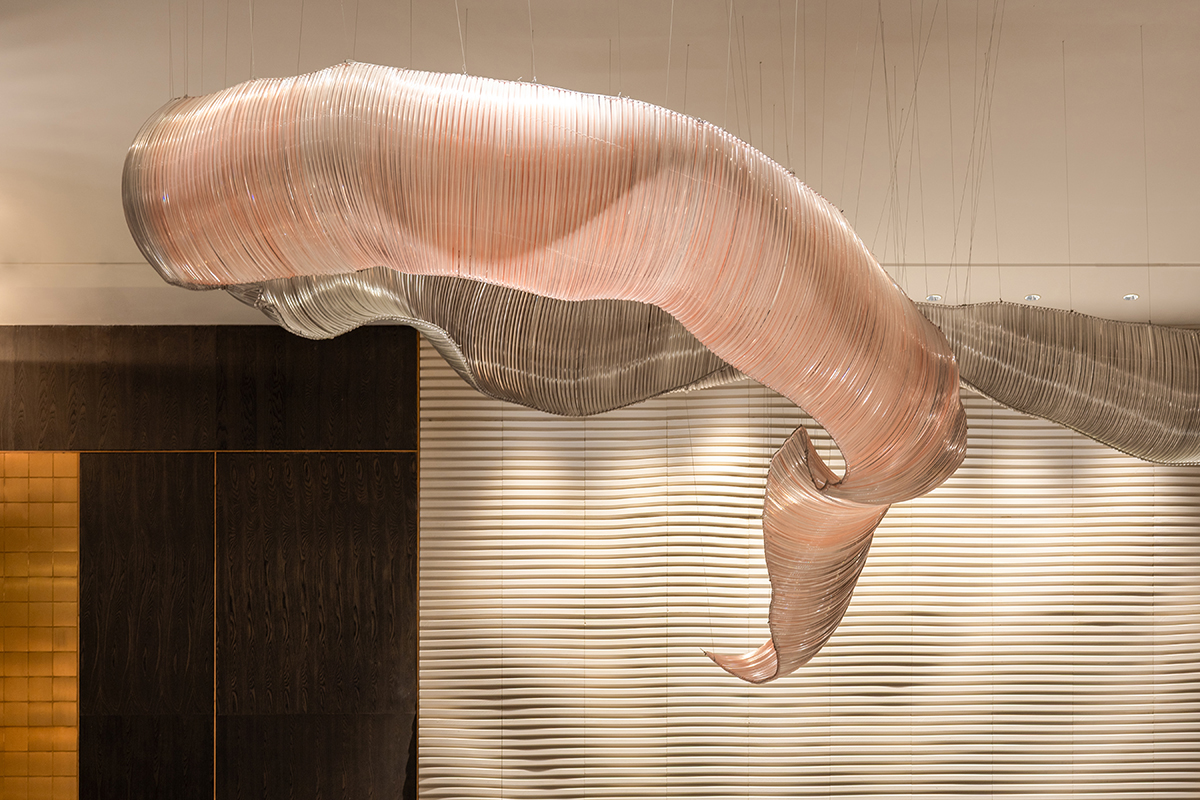
A suspended sculpture appears feather-light against a gently lit ceiling. The feature wall is evenly washed to bring out texture, allowing the installation to be the visual focal point without harsh glare. Here, light is primarily used for exhibition and atmosphere.
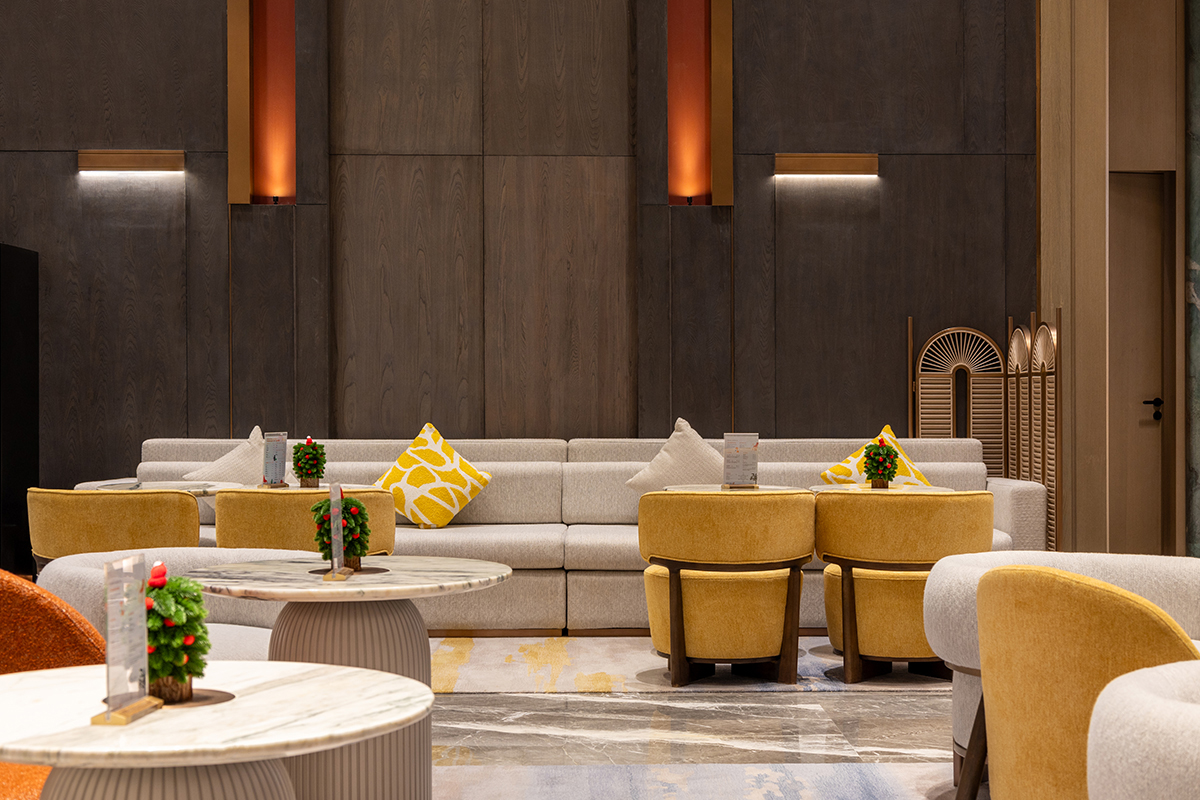
A soft halo on the façade accentuates vertical proportions, and indirect uplighting at the top softens structural edges. Accent lighting focuses on the sofa and coffee-table groupings to create an intimate scale for conversation. The clear play of light and shadow keeps the lobby open yet invites guests to linger.
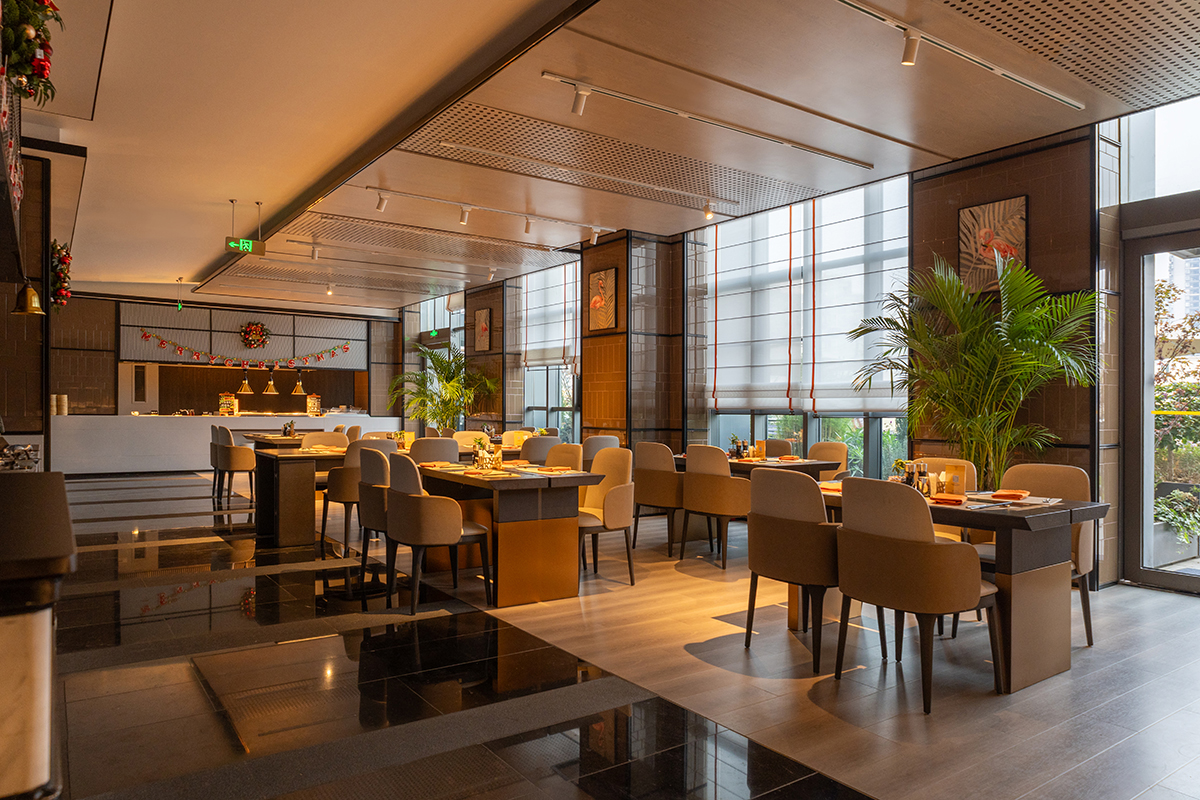
The restaurant is anchored by warm-toned lighting, with task-focused accents concentrated on tabletops. Indirect ceiling lighting minimizes the presence of the structure, creating a calm, comfortable dining environment.
Pendant fixtures define semi-independent dining zones and control tabletop illuminance to comfortable conversational levels. Background walls and wood paneling are kept dimmer so the visual weight naturally centers on the tables. Daylight blends with warm artificial light to produce a relaxed, rhythmic dining mood.
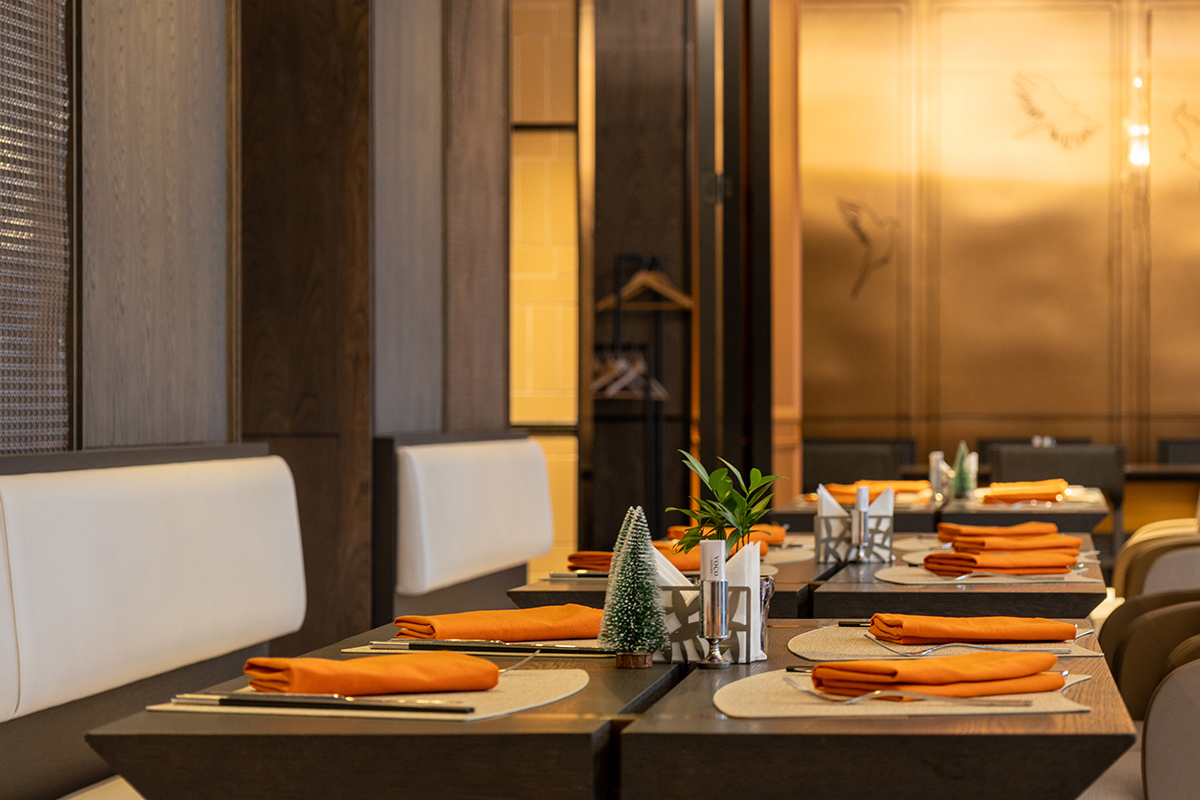
Focused lighting above the long table centers visual attention on the surface. Soft daylight filters through curtains and contrasts gently with the interior warm lighting. The distribution of light reinforces spatial order.
Side lighting highlights tabletop materials and seat profiles, making the dining area feel more intimate. The slightly lower brightness on the feature wall creates depth between foreground and background. Overall, the atmosphere is warm, steady, and composed.
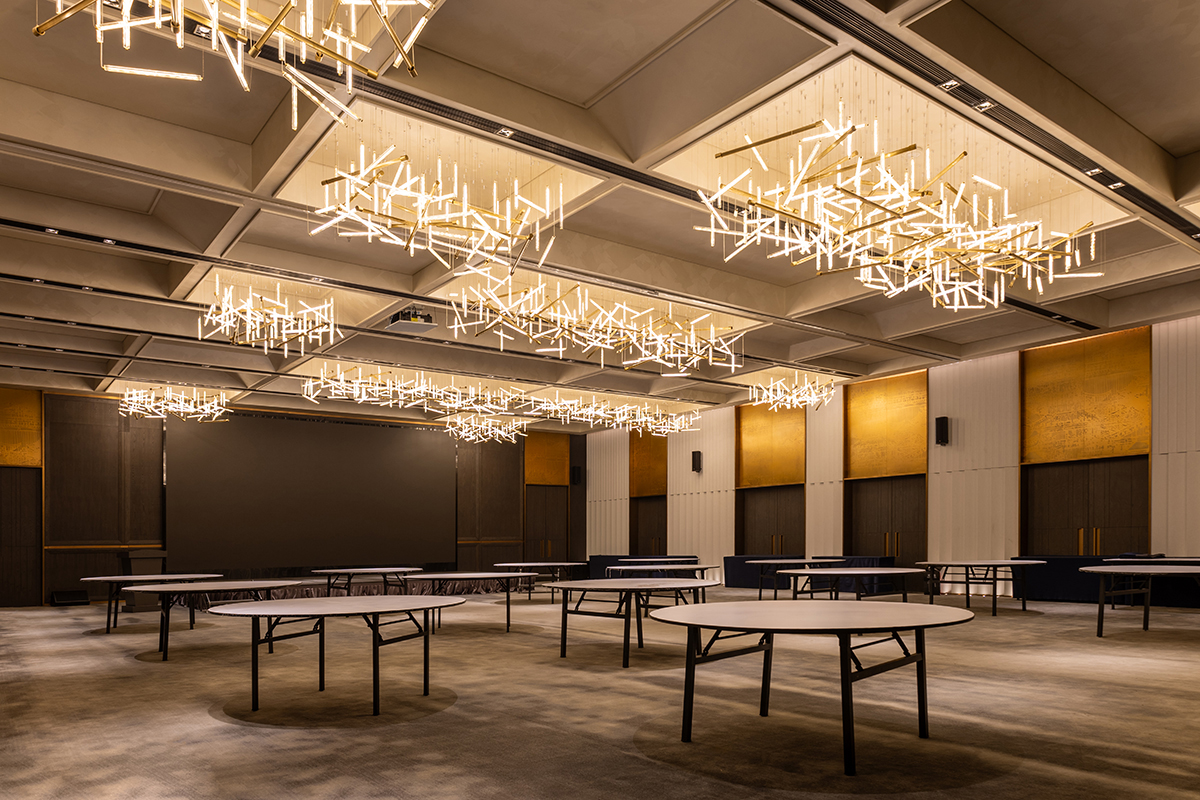
The ballroom serves as one of the hotel’s principal public stages and a key showcase of its quality. Distinctive ceiling fixtures create strong visual identity and act as the space’s focal point. General lighting remains even to provide dimming flexibility for different event scenarios. Fixture forms and layered brightness together establish a sense of ceremony.
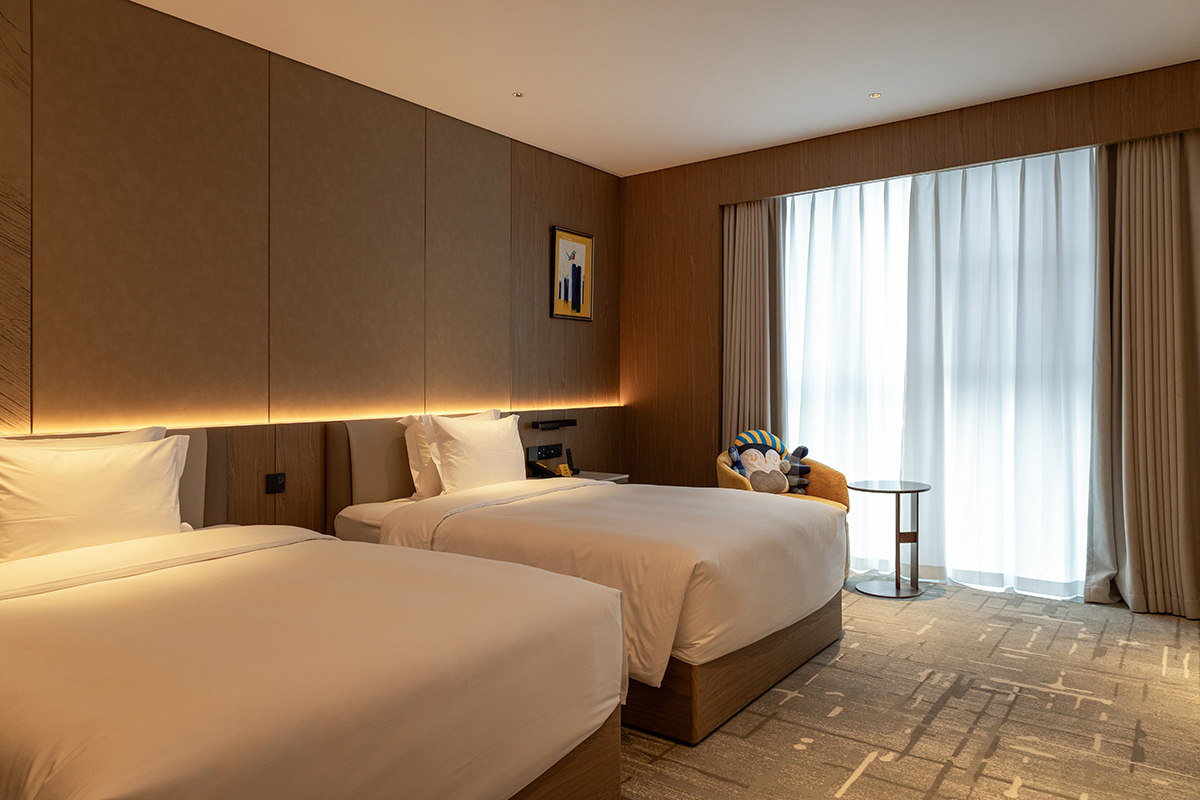
Guest rooms lie at the heart of the hotel’s comfort offering. In the twin-bed zones, direct glare is avoided; concealed headboard strips provide diffused light that promotes deep relaxation and supports sleep.
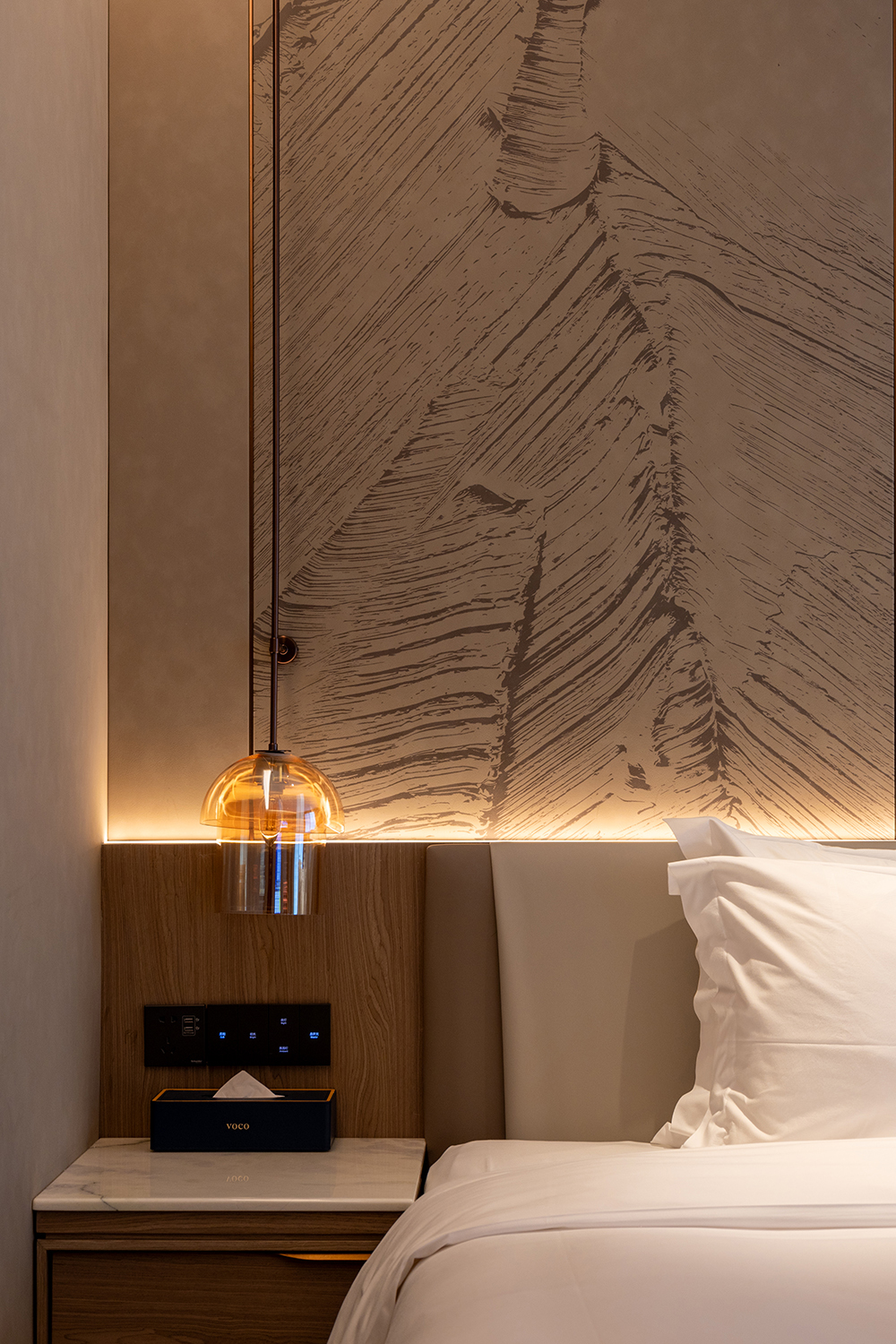
A warm amber chandelier anchors the room visually. Wall-washers precisely reveal the texture of the art-backed wall, highlighting the materiality of the architectural finishes.
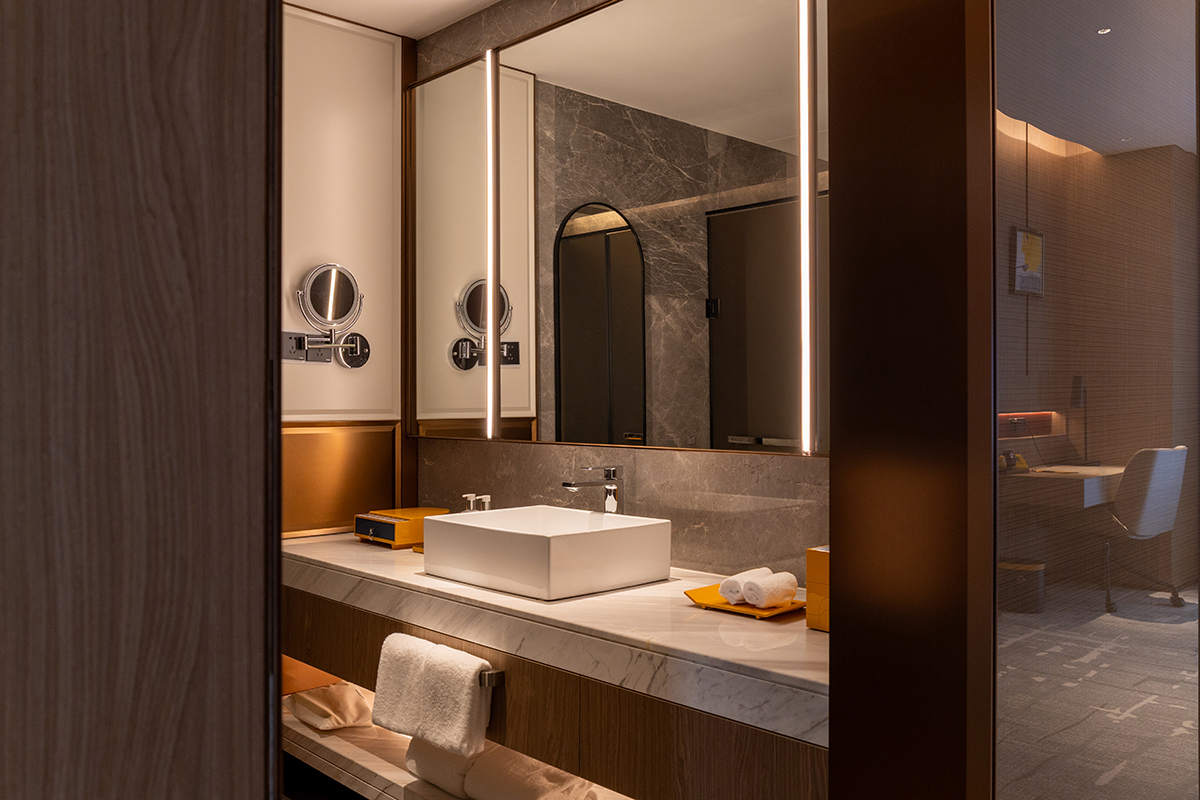
In the bathrooms, vertical linear lights beside the mirror illuminate faces evenly, ensuring functional illuminance and accurate color rendering. Indirect light from the countertop and below creates transitional layers that accentuate stone and wood surfaces. Warm-toned light throughout conveys the refinement and restraint expected of a hotel.
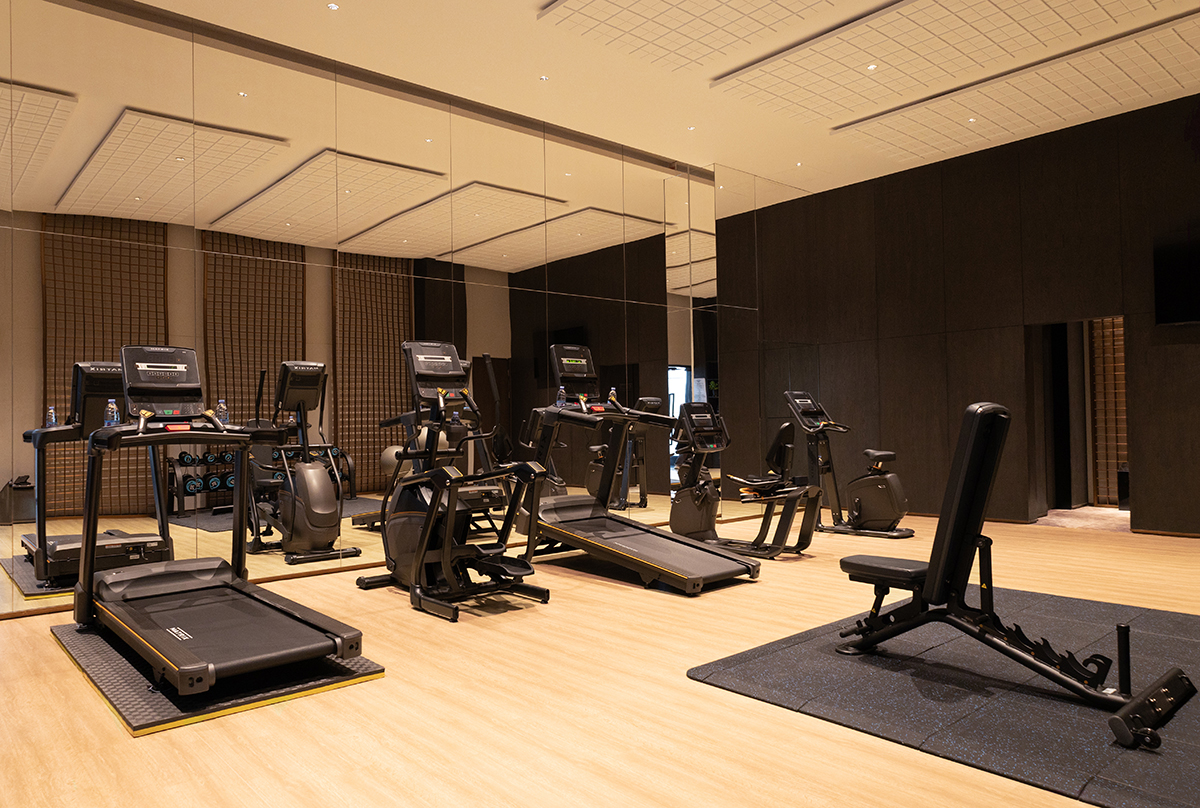
The fitness room uses uniform ceiling illumination to meet functional illuminance requirements. Mirror reflections enlarge the perceived space while brightness stays controlled to prevent visual fatigue. The lighting environment prioritizes clarity and cleanliness, with function as the guiding principle.
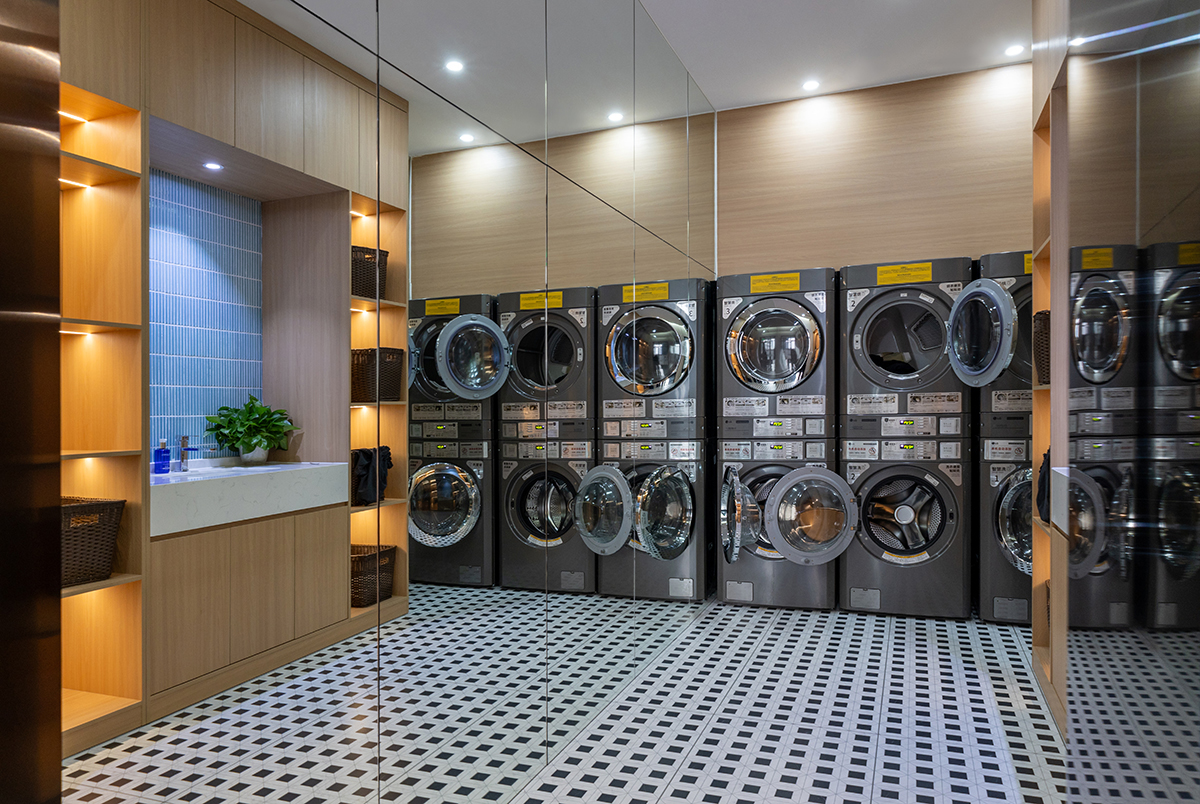
Laundry areas emphasize high-CRI, even illumination for clear task performance. Built-in cabinet strips add a refined touch and keep functional spaces orderly. The overall lighting approach is simple and direct, without decoration.
The project centers on restrained expression and clear order. This philosophy forms a continuously unified lighting language between urban and interior scales. The exterior uses recessed vertical light strips and segmented wall washing to reinforce building proportions and control luminance hierarchy so the tower reads as a clear yet modest silhouette in the city nightscape.
Interior spaces follow a layered lighting approach. Indirect light forms the base layer. Accent lighting serves specific functions and activities. Decorative fixtures appear as visual anchors but remain understated. By carefully managing luminance contrast, color temperature, and surface layering, the lobby, dining areas, and guest rooms all remain consistent in tone and atmosphere.
Overall, the design treats light as a service to space rather than its master. While meeting operational needs and supporting brand recognition, it builds a durable nighttime identity and a comfortable user experience, allowing the building to engage the city with a rational, rhythmic dialogue.