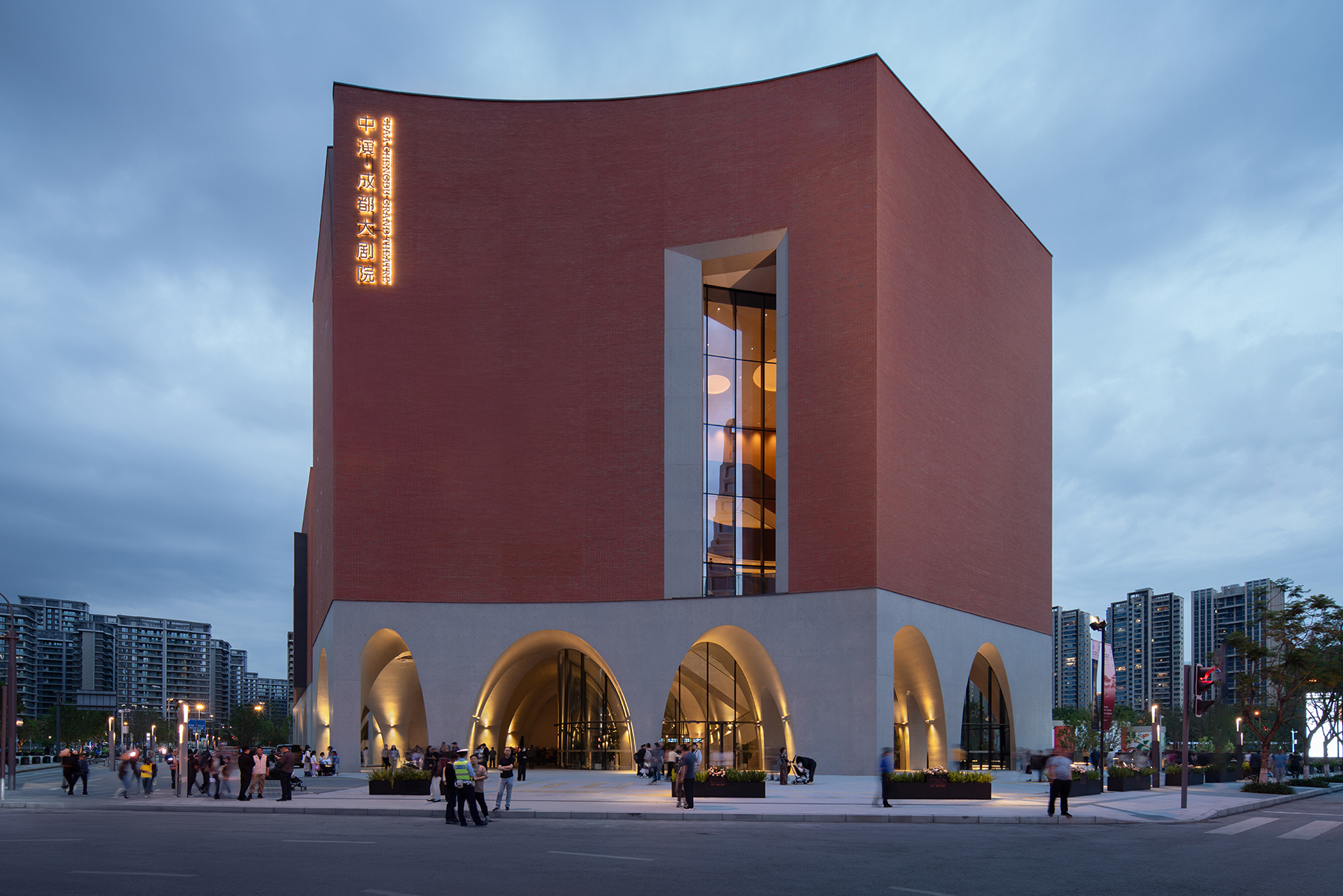
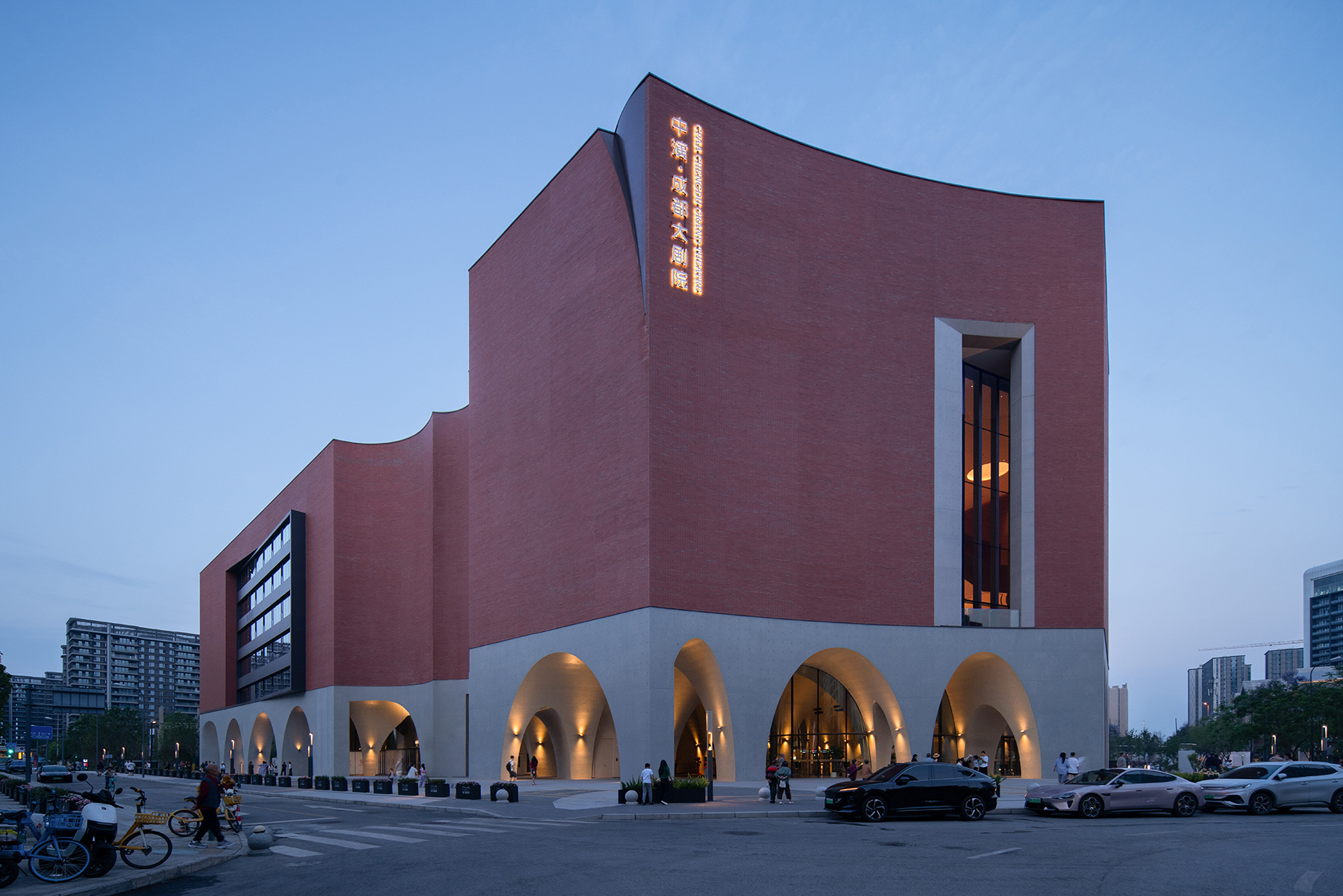
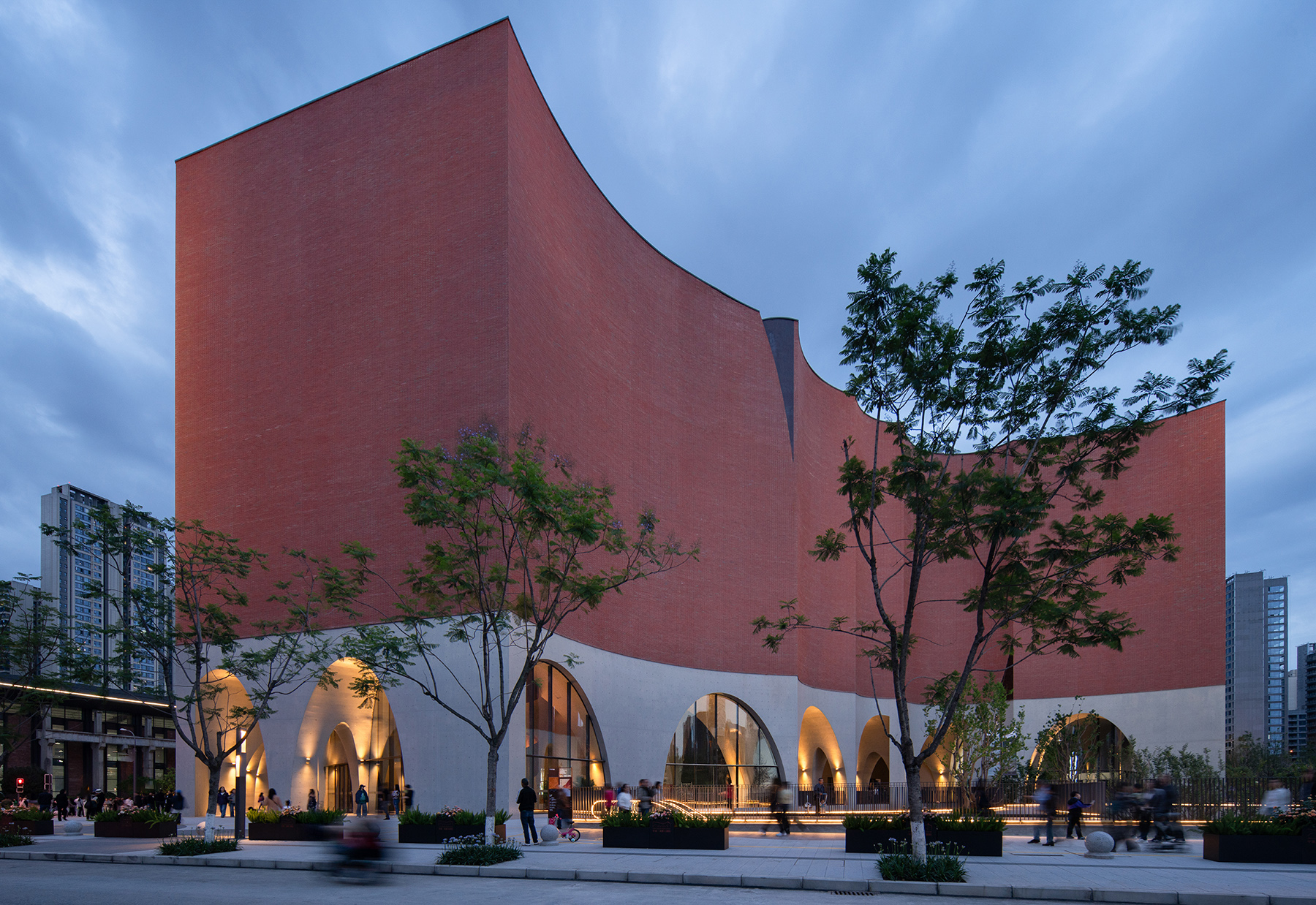
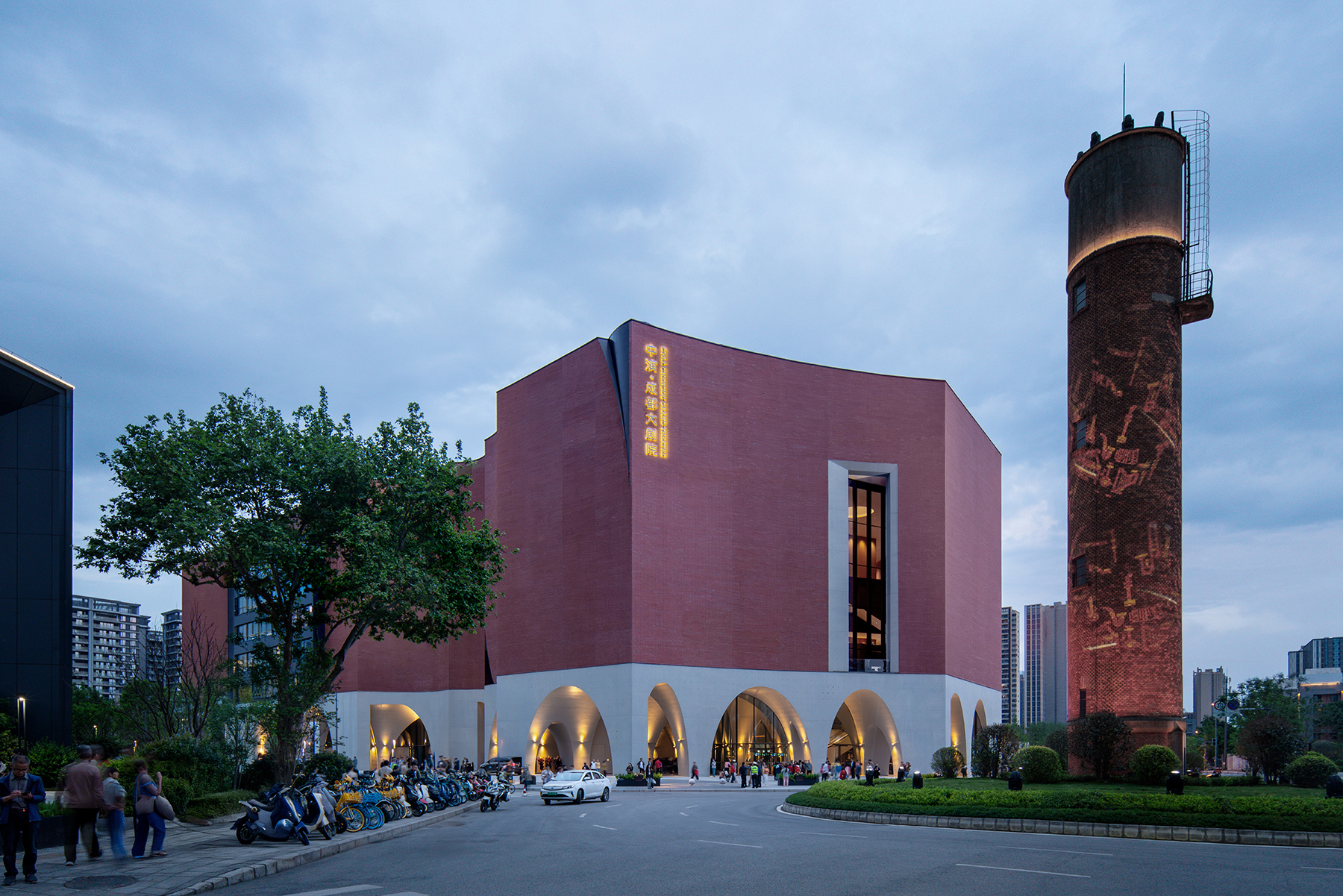
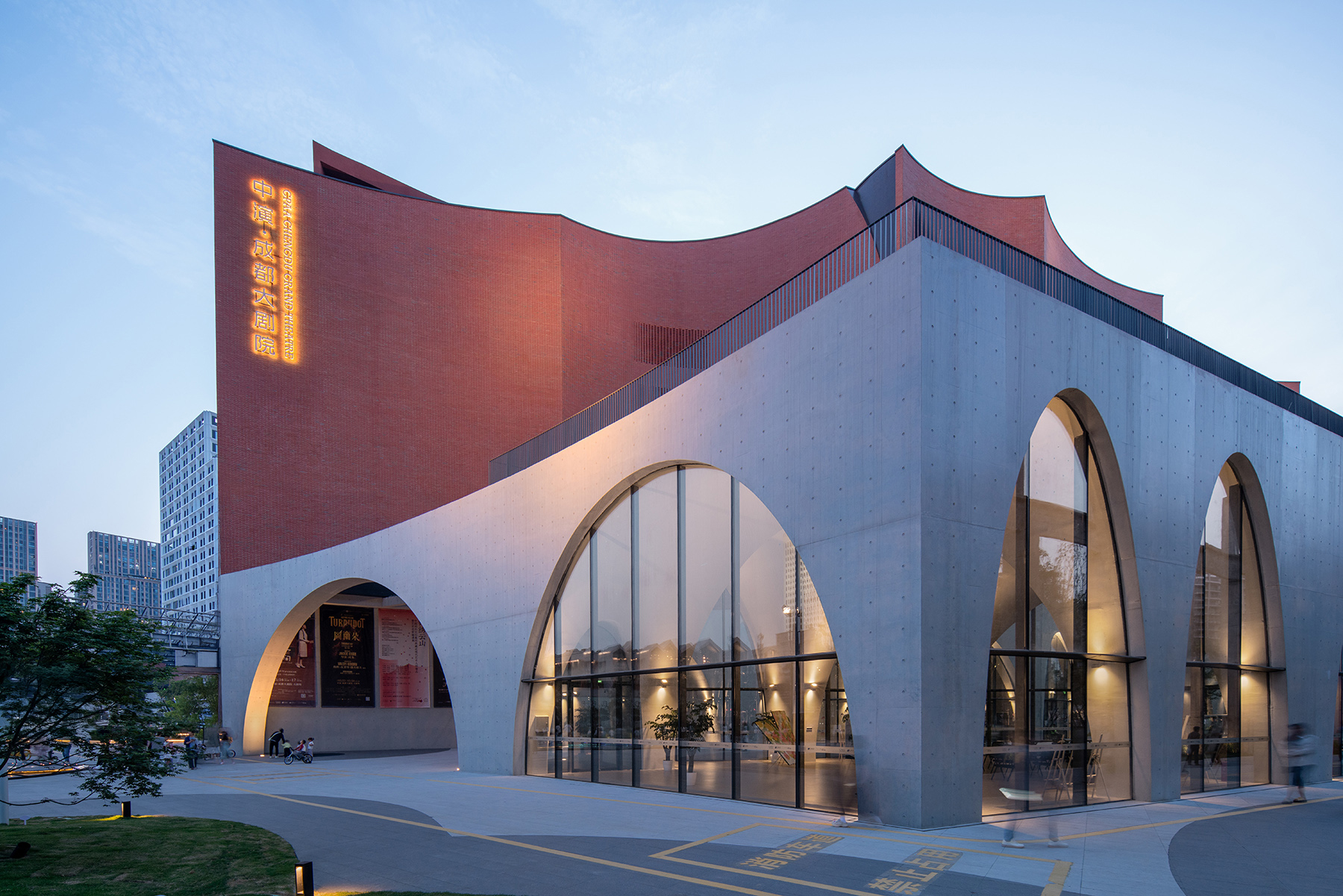
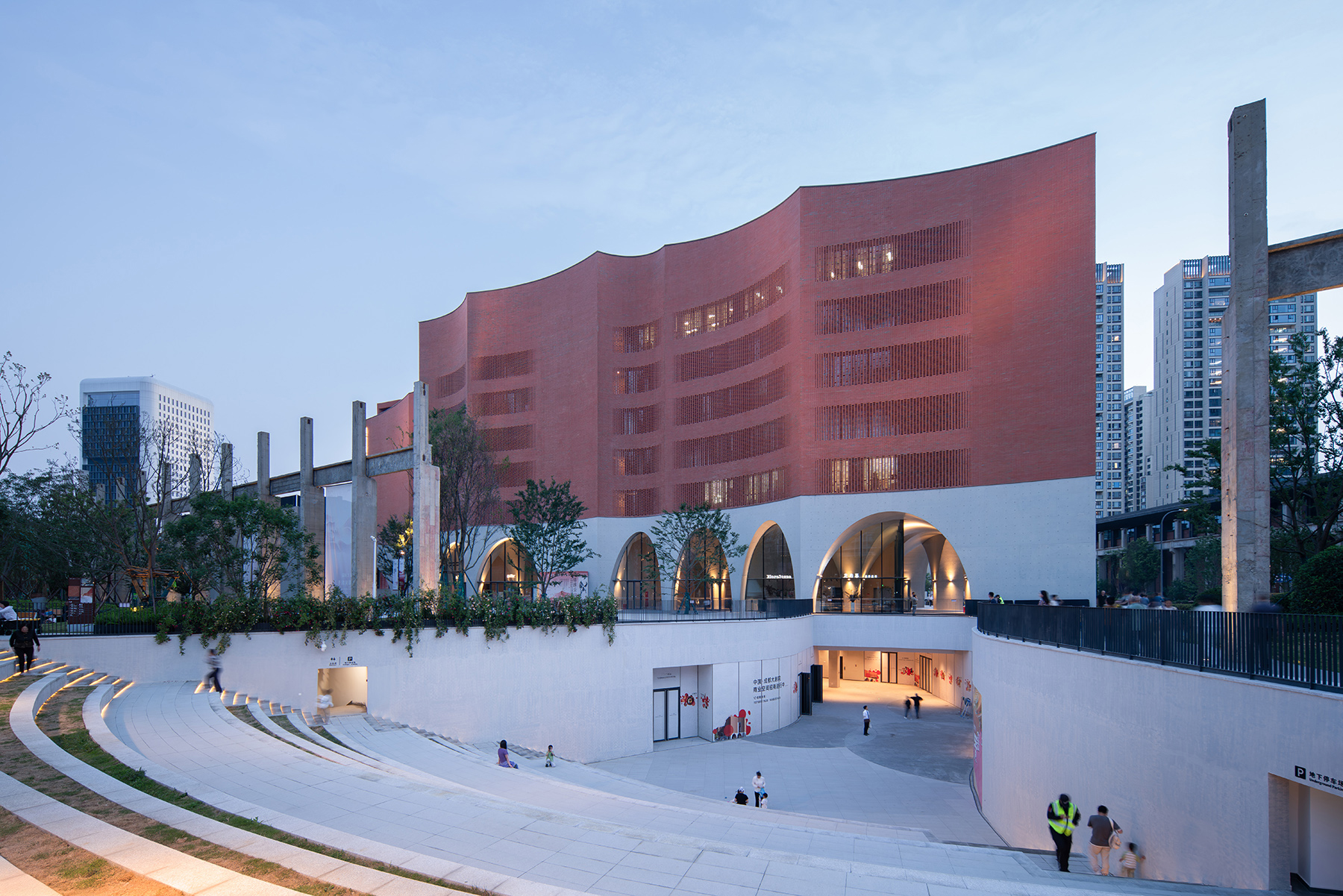
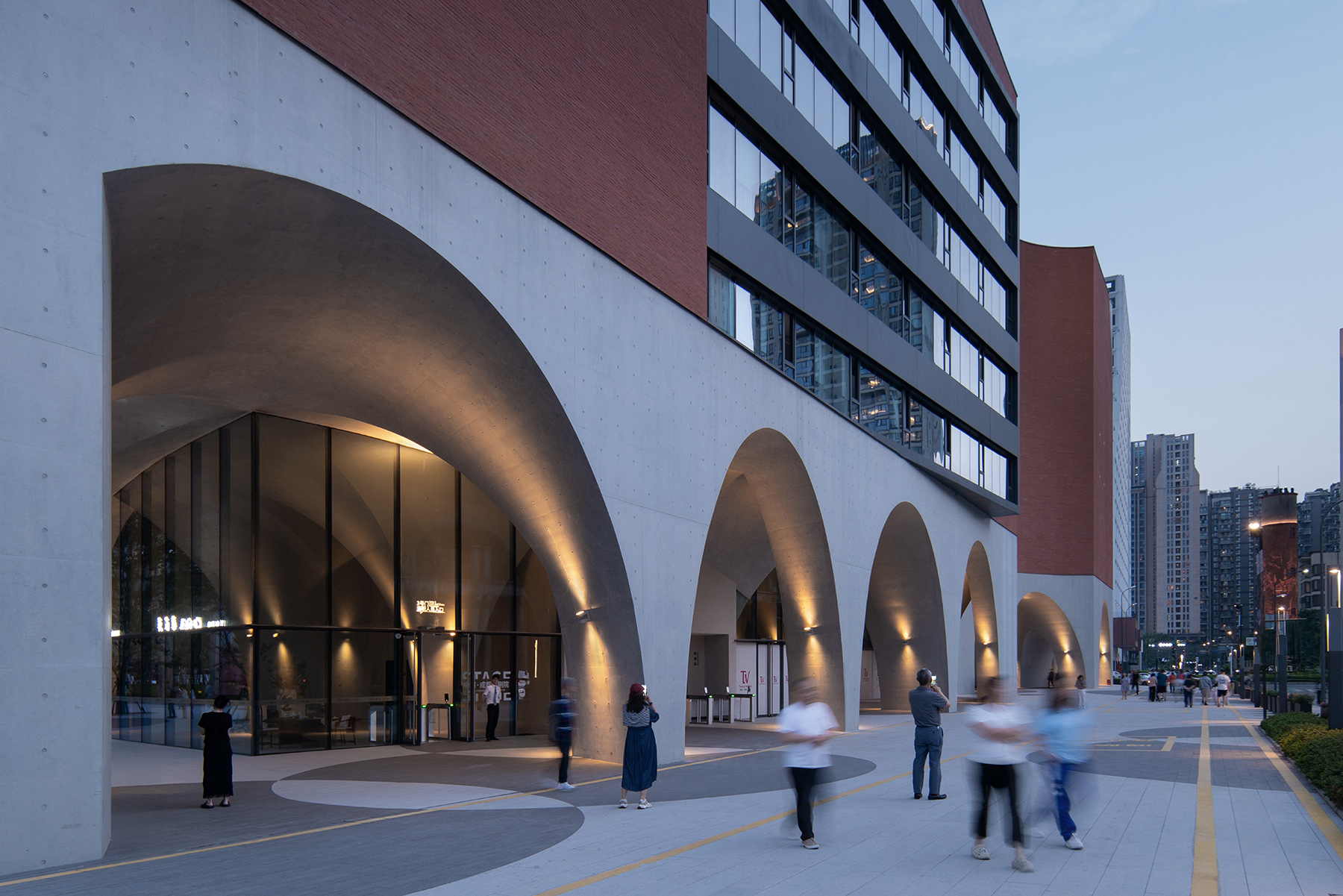
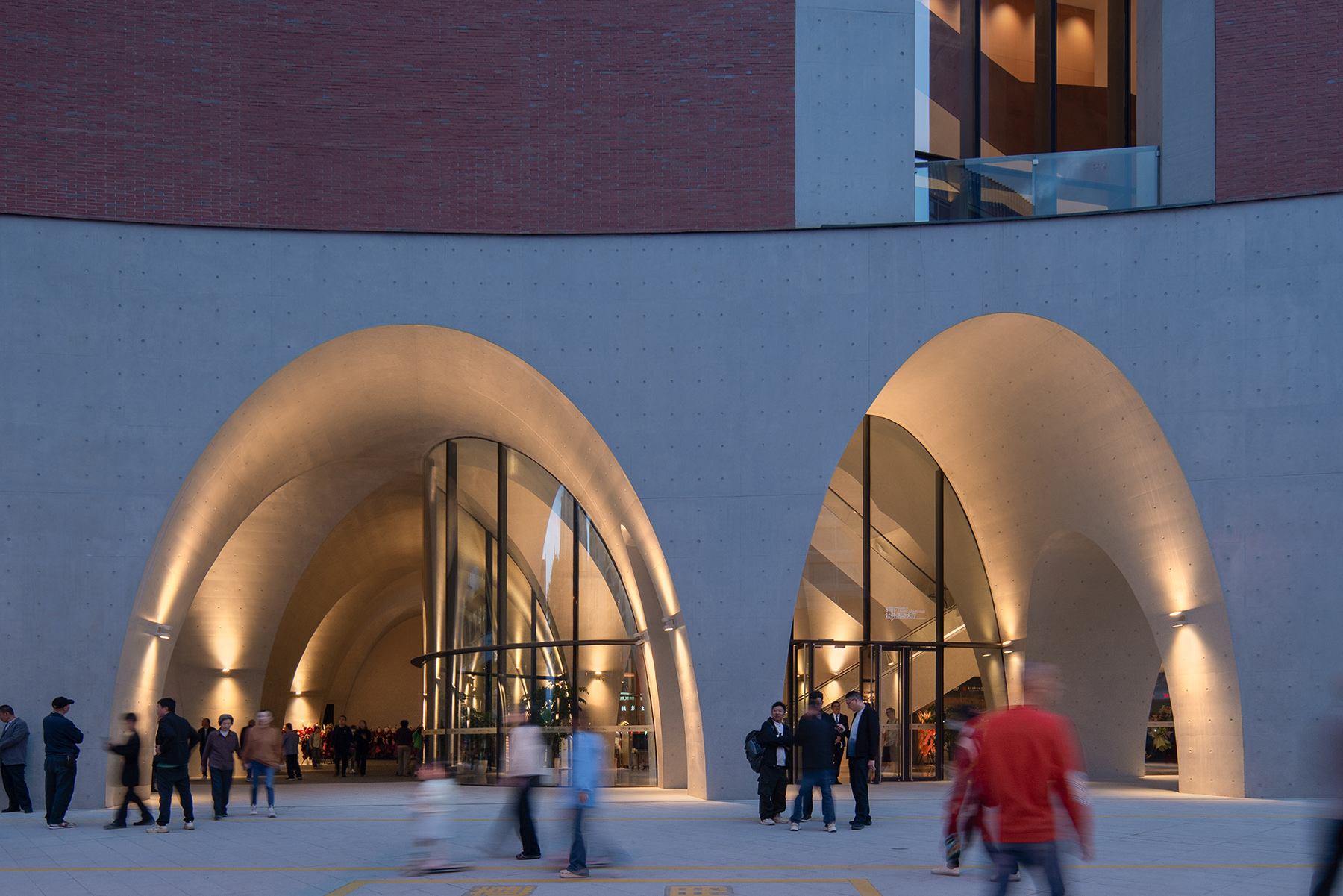
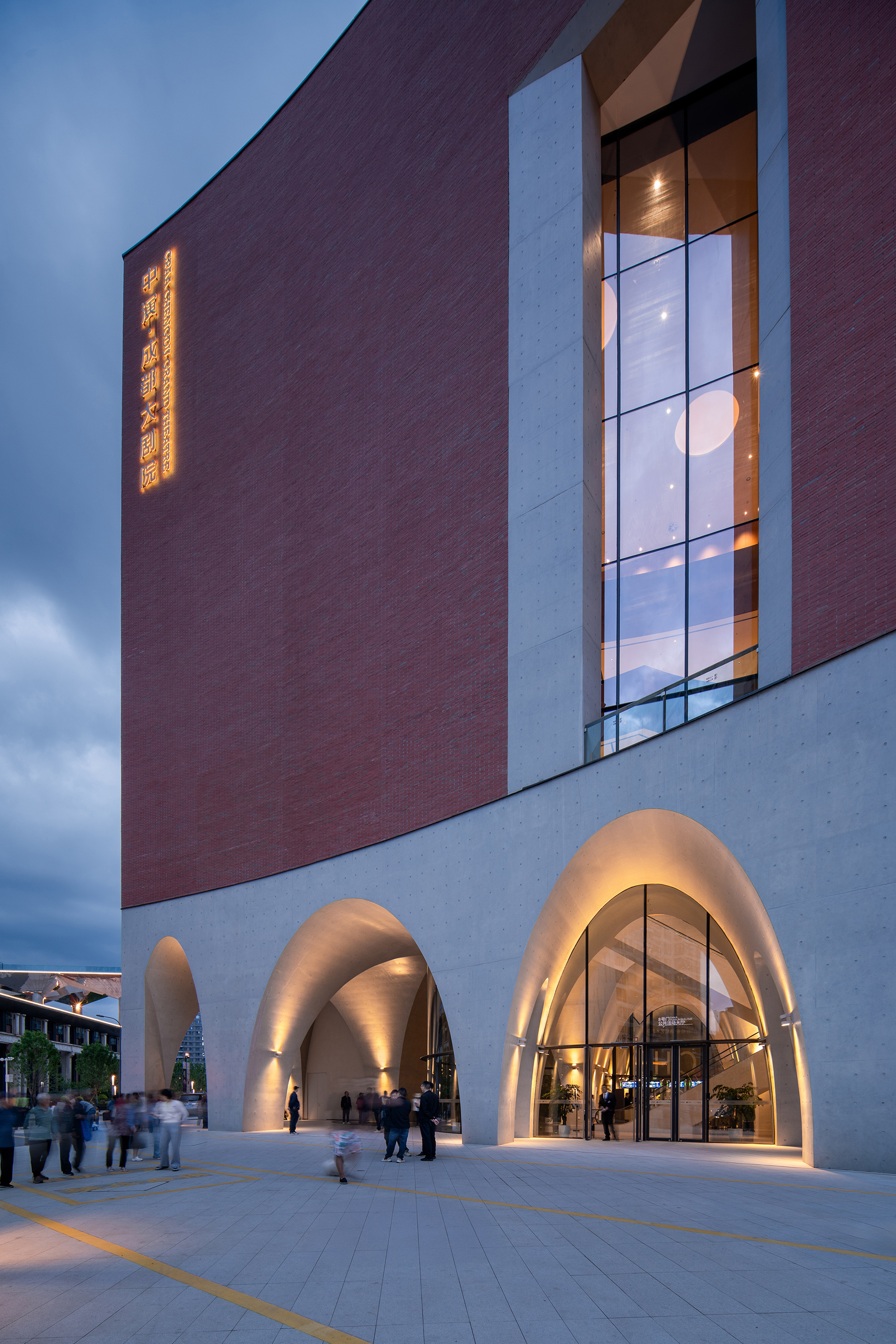
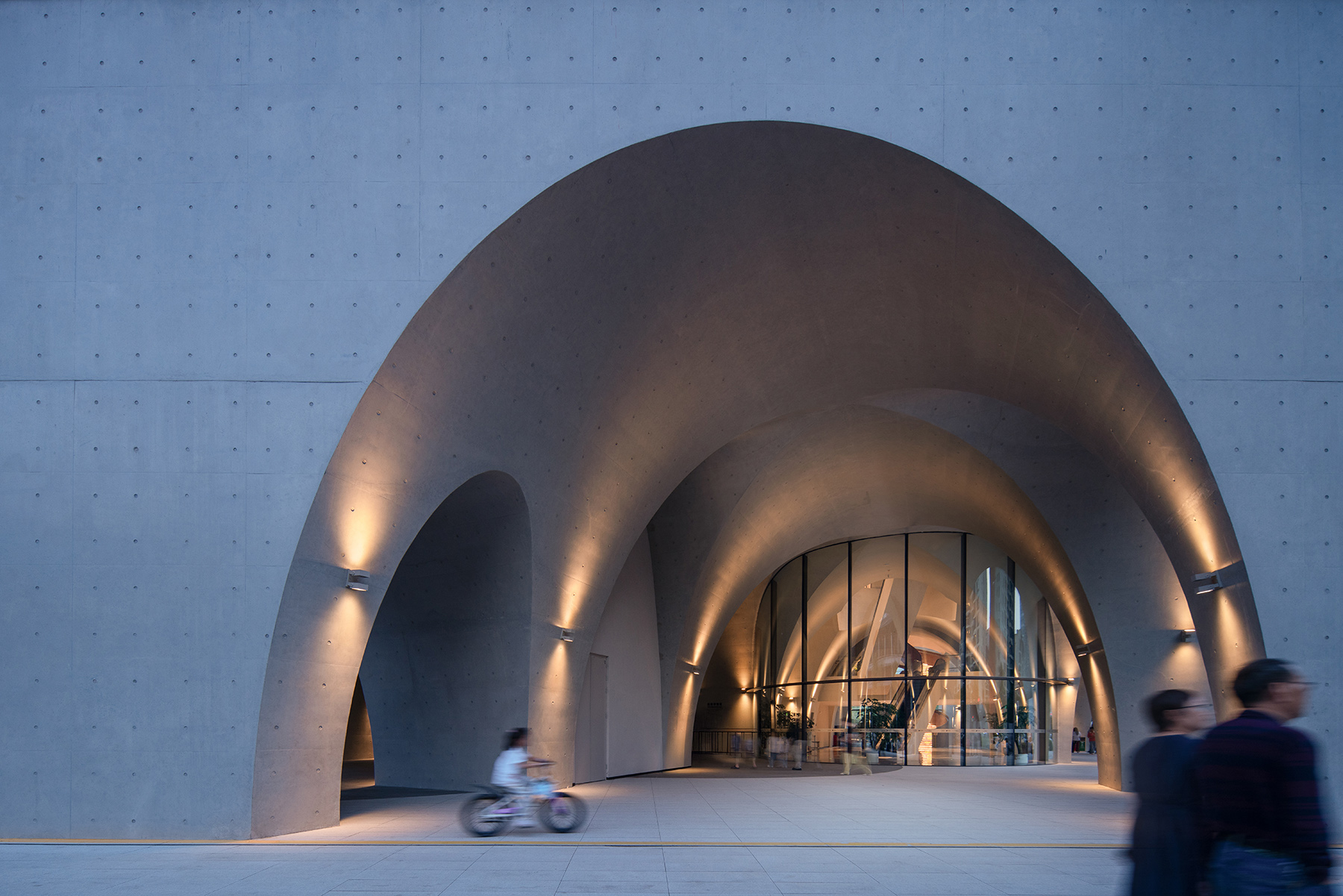
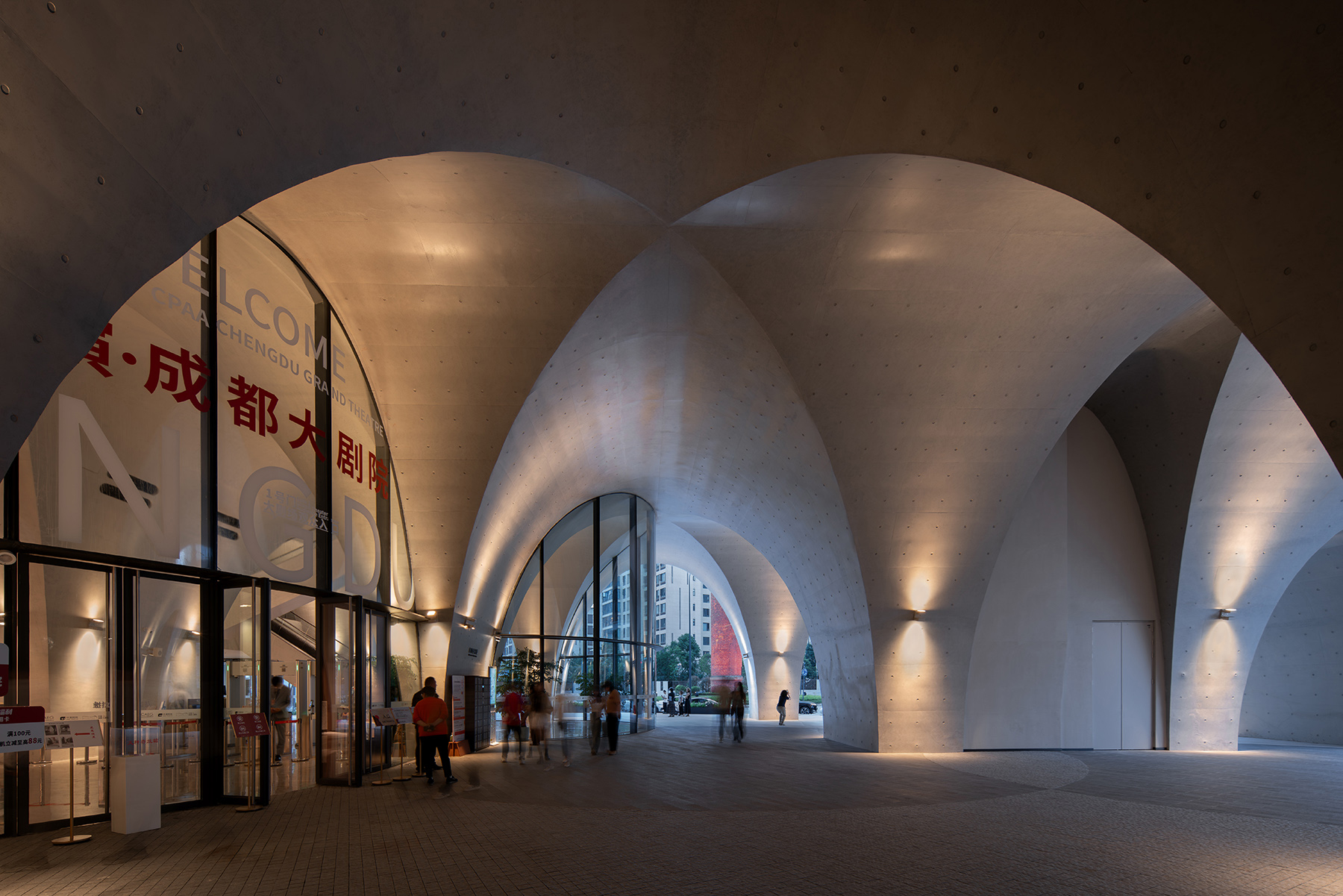
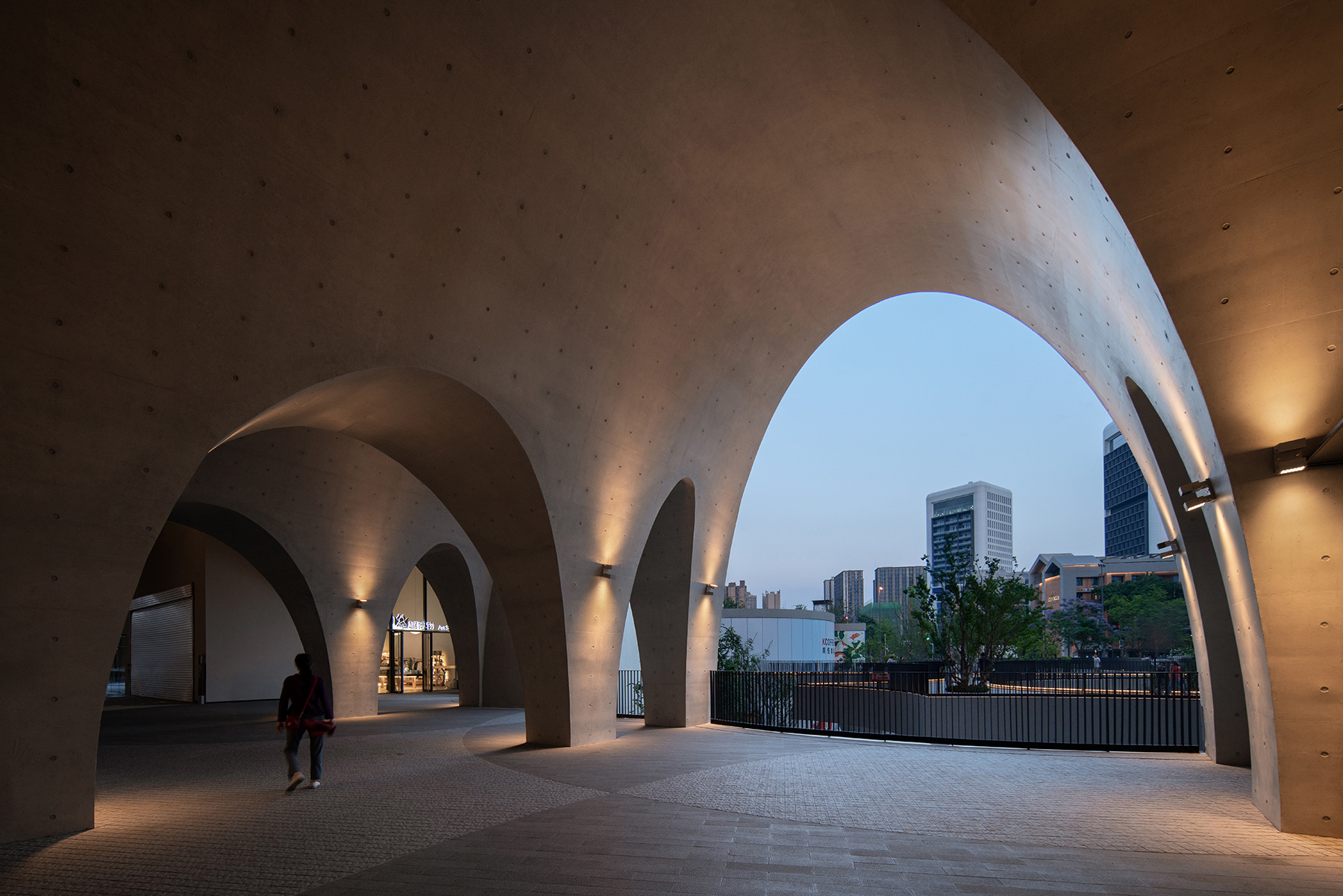
The lighting design is centered on the concept “Give the Light to the Arches,” using light to reveal the building’s structure, material, and nighttime identity. Rather than pursuing overall brightness, the design establishes a clear hierarchy of light, allowing architecture to remain the visual protagonist.
The upper red volume is illuminated with 3000K narrow-beam floodlights, focusing on the upturned roofline and key transitions. Carefully controlled grazing light creates a gradual shift from brightness to shadow, transforming the façade into a luminous surface rather than uniformly washing the entire building.
At the lower level, up-and-down wall lights are integrated into the fair-faced concrete columns of the arched corridors. Upward light grazes the double-curved surfaces, emphasizing the rhythm and geometry of the arches, while downward light provides soft functional illumination for pedestrian movement. The fixtures are concealed as much as possible, allowing visitors to perceive the light rather than the equipment.
The overall system follows a four-level brightness hierarchy of approximately 1 : 0.6 : 0.3 : 0.15, supported by high color rendering, controlled 3000K warm light, and precise glare control. Landscape lighting remains deliberately restrained, using low-level lighting, selected tree illumination, and limited feature lighting to create depth without competing with the architecture.
Through concealed fixtures, controlled beam angles, and carefully calibrated aiming, the lighting follows the building’s curves and folds, creating a continuous rhythm of light and shadow. The result is a nightscape in which light does not simply illuminate the architecture—it becomes part of the architecture itself.